Have you ever worried about who sees you and who doesn’t? Almost everyone will claim that they don’t care whether anybody is paying attention to them and what they think. It’s a lie, though. Maybe one person in a million can truly say that it does not matter to them whether they are visible or not. For me, this was an endless obsession, and it didn’t help a bit that millions of others were in the same situation. But now I know that it’s possible to shed this madness. Wouldn’t you like to join me?
My story goes like this: from the first day, my life was about being seen and not being seen. Adults watched and controlled. Other children were curious or observant. Much of the time, it was impossible to get away from other people’s eyes. What’s more, in my religious upbringing, a deity was always paying attention and seeing everything. Early on, I never gave this much thought—it was my natural condition. Eventually, I understood that I was not alone in carrying this strange load. Many, many others also worried all day long about being seen and not being seen. I will never know if any of them got through and past that predicament.
When I was a child, parents, teachers, family members, parish priests, and benevolent neighbors encouraged me to raise my hand, speak up, speak louder, be seen, be remembered, stand out, raise myself up. I tried that, but it did not come naturally. I didn’t care enough for people to want to make an impression, and the cats and dogs and birds I loved did not need me to put on a show for them. When, for about eight years, I was an obese young person, endlessly bullied at school, being visible was hell. I wished for nothing as much and often as invisibility. I remember extensive, sweet reveries showing me how simple and pleasant life could be if only I could move through the world without anyone looking at me.
When, through a sudden stroke of luck, I lost weight and joined the races, invisibility no longer served me. If I liked it or not, I had to expose myself and wave my little flag. Being a good student, a deserving worker, boyfriend material, an interesting person, or a writer and artist worth paying attention to—all these things required bright lights and as much visibility as possible. I did whatever I could, but my nature got in the way. Except for a few persons I genuinely cared about, I still had no real interest in people, especially if they came in groups and crowds. I liked being alone, reading or writing or drawing something, and giving it to somebody or throwing it away when I was done. Also, I lacked outstanding talents and didn’t enjoy working hard—two more strikes against visibility.
However, I was extremely lucky, because I met kind, understanding people. They offered love, paved my way toward well-paying, sometimes interesting work, helped me out when I was in between things, and pointed me in promising directions. Their generosity more than made up for my lack of motivation and talent. At times, thanks to them, I was in positions of visibility, fortunately never for long. What I still liked most was being at home in a quiet space, maybe with a trusted partner, a cat or two, a book, a pencil, a piece of paper.
Along the way, I learned to meditate and continue walking onward, no matter what. I met clueless and “enlightened” people on various paths, and consumed teachings about the illusory nature of the self we invent and present to ourselves and the world. These made sense, although I also found that “spiritual” environments were as full of imperial egos and false hopes as the rest of the world. I saw that my long-ago striving for invisibility and my reluctant pursuit of visibility came from the same place of pain and despair, of not wanting the world to grind me to dust. Neither of them could help me, because they required maintaining a nightmarish artifice.
Eventually, I figured out that being a human person was not at all what I had dreamed all these years. It was simpler, humbler, more beautiful, more devastating than I ever imagined. Life, the world, the wind and the waves did not care whether I thought of myself as visible or invisible. These things didn’t ever matter, although at the time I had what seemed like good reasons to wish for them. In my early fifties I found that life’s trickery had brought me to a kind of fulfillment of my old goal of invisibility at a time when I didn’t care about it anymore.
This is what happened that day: I stood at a drugstore counter on State Street in Santa Barbara and was overlooked. I watched the other customers and the people working. It wasn’t that they preferred to do business with each other and make me wait, or that they had some reason to treat me badly. I knew that they genuinely did not see me and that the reason why did not matter. Maybe I was standing in a poorly lit spot, had not made eye contact, or had not properly tried to draw attention to myself. I found this moment remarkable and, in a way, liberating, but it did not make me happy or unhappy.
More, similar incidents occurred. I sometimes ascribed them to my age, or rather, the age difference between me and other people. Eventually, practically everybody, everywhere, was so imprisoned by smartphones and other screens that nobody saw anybody anymore. At that point, experiences of invisibility and anonymity became impersonal and ubiquitous. They pervaded the entire culture. Maybe that helps explain so many people’s desperate fascination with celebrities and stars, the people who are forever in the bright lights.
No longer having to strive ceaselessly to be visible or invisible brought unexpected relief. It made it possible to write, draw, or say something without having to wear a mask or a costume. At least for short periods, I could be comfortable and feel, for want of a better word, unfragmented. I’ll never be one of those people who evangelize loudly and in bright colors on behalf of blissful ecstasy or passionate annihilation. Those are blunt simplifications that don’t do justice to life as I experience it.
Can we help each other get out from under the glaring punishment of having to be visible or invisible? We all matter because we are alive and leave imprints and echoes wherever we go, but not because any one of us is more deserving, gifted, chosen, or special. Understanding this can give us freedom to be whoever, almost anywhere. To do anything and keep discovering. When causes and missions are urgent and demand us to do something, we can act without activating that part of us that worries about the glory of visibility or the shame of remaining unseen. We can learn a language or a skill because we find it worthwhile, not because we want to impress ourselves or other people. We can visit places, attend concerts, or read books because they call to us, not because they help us construct a desirable version of self or erase one that we would prefer to hide. We can even wear something because we like it and it suits us, no matter how it appears in others’ eyes.
I’m a slow learner. It took me almost seven decades to get to where I am now. Maybe you don’t need that much time. But it’s totally fine if you do. After all, nobody’s watching.
Sometimes, travel lets us relax and recuperate, and I’m sure there’s a right time for that. But I’ve always felt traveling should help you learn, see, be surprised, and get out of yourself, or the effort isn’t worth it.
Fifty years ago, in 1972, I took my first trip to Paris. It was a puzzling, exhilarating, lonely experience. Maybe the most important thing I began to understand during that adventure was that it doesn’t matter much if you tell yourself that you love or hate where you ended up on your travels. You can learn something, be surprised, have rewarding experiences, and enjoy your life even if you dislike a place and never get comfortable there. The most important thing is that you gain distance from the familiar, because it blinds and eventually erases you until you forget yourself. Of course, discomfort can soon get tiresome if you don’t know how to replenish your energy, or your fears and hesitations take over your life. I’m still thankful that a chance encounter with another traveler at the right moment helped me let go of my dead-ending routines and make the best of the time I still had left in Paris.
That sojourn of almost three months has expanded in my memories and now feels like much longer and more colorful than it was. It still yields a bundle of recollections in which I can recognize myself. Of course, I remember much of the times immediately before and afterwards, but in comparison those feel more like watching somebody else’s life. Somehow, in Paris I entered a chamber that has a connecting door to my 2022 present.
I remember that journey to Paris very well, maybe because I was certain that I was making a big mistake and shouldn’t be going there. But I had made my decision, my parents paid for my train ticket, I was hoping to get by on my savings, and people had promised me that I was going to have the time of my life. After thirteen years of school, this summer was going to be the longest period of my life since my childhood to be completely unstructured.
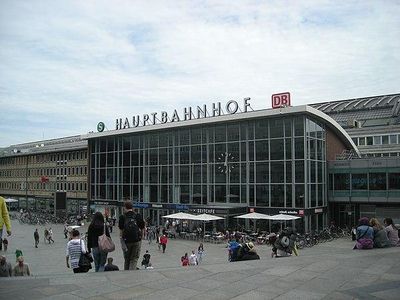
One morning in May, shortly after seven, I picked up my suitcase and rode the tram to the main train station in Cologne. The ride took maybe twenty minutes, and then I was in the noisy, crowded station with its characteristic, oily smell and the frequent broadcast announcements, of which one could never understand anything whatsoever.
I had visited London for three or four weeks during the summers of 1970 and 1971. I knew English well enough to make myself understood, but I had a hard time following conversations when people spoke at their natural speeds and didn’t make allowances for me. Still, I felt I was doing much better at the end of my second visit than at the beginning of the first. Returning to London would have been a natural and reasonable thing to do. A few of my former classmates were going to be there. I loved the place and felt at home in it. Its giant size and chaotic layout never bothered or confused me. I knew where things were and what neighborhoods and streets I liked best. I could get cheap standing tickets to the BBC Proms at Albert Hall and hear some of the world’s most accomplished musicians play the music I loved.
Nobody I knew was going to Paris, and my French was stunted. At school, I hadn’t had any French classes in years. I carried on learning the language in evening courses offered by my city’s inexpensive adult education college, but soon ran out of steam. However, back then I felt that I could learn anything I wanted to very quickly, so I had no qualms about traveling somewhere where the language would be difficult. I was confident that I could pick it up. I didn’t have a map of the city, but I had read that you could get your bearings with the help of the route schemes posted in the Métro stations. That would do just fine.
As many times later, I was conflicted about traveling. Probably, what I wanted to do most was to be alone, sit in my room with the cat on my lap, reading and listening to music. But I knew that was so unacceptable to my parents and everyone I knew that I couldn’t even really admit it to myself. My parents and friends expected me to take a trip, and I felt that returning to England yet again would put me in a box or somehow shrink me. At the end of school, I was disoriented and missed having the familiar structures to guide my life. I saw that this wasn’t healthy and I should force myself to move on to whatever came next, and traveling would supply the necessary friction and suffering. Not always clearly and coherently, I believed that it was better for me to learn how to be a stranger, not pretend familiarity in a life where I usually felt I didn’t belong.
Curiosity helped a little bit, but I already expected that I would no longer experience it after a day or two. I did want to see for myself the famous, hyped locales and buildings that I had heard about. In my schools’ history classes, teachers covered the French revolution and its aftermath very thoroughly. Before that, Louis XIV and other French kings made their appearances, all the way back to enigmatic Charlemagne and his untalented, quarrelling sons. In contrast, we learned practically nothing about English history. It started with William the Conqueror in 1066, skipped to Queen Elizabeth I, rushed to the disasters of industrialization in the 19th century, and that was it.
Relatives living near Baden-Baden spoke French, had friends in the Alsace, and sometimes visited Strasbourg, less than one driving hour away. They knew where to cross the border on narrow, sometimes unpaved roads without being stopped. From them, I had acquired sweet illusions about French people and culture. For instance, the French were said to be enormously fond of their cats and dogs. They treated them well, much better than the Germans did, and even had cemeteries for them. I found that extremely attractive. Existing in a kind of utopian serenity, they were rumored to take time to appreciate and enjoy what was good about life. I was sure I could find friendly, smart, generous people my age and get to know them.
The train journey took about eight hours. Between Cologne and Aachen I indulged in a lengthy reverie about a young woman I hoped to see again, daydreaming so vividly that I still remember it. I had the second-class compartment to myself for much of the time. Customs officers silently and efficiently checked everybody’s passports shortly after we left Aachen. As we neared Brussels, commuters—grey, tired, chilled-looking people—got on the train for a short ride. They remained standing in the corridors. I saw long stretches of tiny rowhouses and apartment buildings in the immediate vicinity of industrial plants. Not far from the French border, the train stopped for way too long between flat, green fields. This time, the border patrol was more severe, although they just looked and frowned at me and my passport. Other people had to answer questions and open their luggage. On the French side, the clouds and trees seemed grey and tired, and so did the buildings. A few times intriguing, complicated buildings towered on the horizon, but they vanished quickly.
At the outskirts of Paris, the train lumbered unevenly past gigantic, hideous apartment buildings, crumbled-looking churches, and gaudy, shredded billboards advertising cigarettes and booze. With infernal squeaks, it crossed ancient-looking iron bridges over busy streets that seemed grossly unpleasant, like some kind of hell made out of dust and tired bodies. Unlike the train journey from Dover to London’s Victoria Station, where one had the illusion of imminent arrival but still rolled past what felt like millions of little brick homes clustering around parks and town centers that became ever more urban and chaotic, the last stop came quickly.
Standing in front of the Gare du Nord, I let the rough, noisy foreignness hit me and immediately regretted having come here. Voices I couldn’t understand, unfamiliar cars going much faster than street traffic did at home, shrill sirens, noxious air, rotten-looking, soot-covered buildings with ugly neon signage. Pedestrians moved awkwardly and quickly, as if blinded or with their faces turned inwards, loose in their clothes, not like the more tightly and extensively draped Germans. I had to make my way across town to the Porte d’Italie, where I would catch a bus to the suburb of Sceaux. I was going to stay in a youth hostel there, the only cheap-enough accommodation I had found in the metropolitan area. The man in charge of it had written me a couple of friendly postcards with directions.
I wanted to save as much money as possible for books and records, so I decided to walk instead of taking the Métro at the Gare du Nord. But when I checked the map at another Métro station, I changed my mind because I saw how little progress I had made. It was best to double back to the Gare de l’Est, not far from where I had arrived, or I would have to change from one Métro line to another—definitely the kind of hateful challenge I wanted to avoid. When I eventually arrived at the Port d’Italie, furious crowds rushed every which way and crammed into the buses. I was sick from the fumes and the heat.
The youth hostel was a two-story, distressed building surrounded by weedy lots and a dense, small grove of fragile-looking trees. Except for the postcard writer, who continued to be friendly in person, nobody much was around. I gave him most of my colorful French banknotes, ate the rest of the crackers I had brought with me, and slept on the lower level of a bunk bed. Eventually, I figured out that most of the other male guests spent evenings and nights in the women’s quarters, the other half of the building. The following day, I would also find out that I got panic attacks when I walked through the woodsy area at night—the shortest way from the bus stop to the hostel—and avoided it.
But I had been used to intense, crippling fears for many years. Something I didn’t expect and which was much worse were the toilets. The youth hostel only had the kind of latrines that consist of a hole in the floor, with ribbed tiles on each side where you’re supposed to place your feet. I couldn’t make that work and was constipated for days. Then I found Métro stations where you could hand a few coins to an attendant—usually, a dignified, elderly Black woman—and use an extremely clean sit-down toilet. For a little more, you could take a long, hot shower and dry yourself with a freshly laundered towel that made you feel like a better person.
A few steps away from the hostel was a gargantuan supermarket, much larger than those at home. The orange building was brightly lit inside and outside, always open, never crowded, and nobody bothered you if you needed to look at packaged products to figure out what they were. The supermarket became my source of pale bread and eggs I fried in the filthy, crude hostel kitchen until I figured out that street food in the Quartier Latin was even less expensive. It also sold clothing, household goods, furniture, and stationary. I found lemon-green plastic templates to help students draw a map of France, with perforations for department borders and the main cities, and bought a handful as gifts for friends.
I adopted a routine where I rode the bus to the Porte d’Italie, took the Métro to some distant station, and hiked through the neighborhoods from there. I found that Paris wasn’t likeable or welcoming, especially not for somebody on a tiny budget. I was appalled to be asked to pay so I could sit on a chair in the Tuileries or be hounded by a photographer who wanted to sell me a portrait of myself. The bookstores were expensive, and staff didn’t let you browse for long before they suggested you make a purchase. People my age didn’t look like me, they mostly dressed and acted as if they were twenty years older, and many seemed perpetually angry. I didn’t find any of the “alternative” and “underground” teahouses, vegetarian cafés, or bookshops that attracted somewhat misplaced, awkward, questioning people like myself in Cologne or London. Soon, I felt that being unmoored and alone in Paris was a kind of self-inflicted punishment.
It took me a long time to get a little more comfortable and find neighborhoods, parks, and streets I enjoyed or that were a little calmer than the rest of the hectic urban environment, which always seemed to be fueled by inaudible screams. When I could, I slowed down, sat somewhere and watched life go by, read, and wrote—in my journal, or letters and postcards home. I only remember one particular book I purchased and read with great love and enjoyment, a biography of Gustav Mahler, then and now a composer whose work I never tire of. His exalted outcries in quoted letters to his wife and other people evoked an almost erotic feeling of despair in me.
I found quiet spots which were never crowded and where I could shelter from the dusty, hot, hyper-charged city, including some stretches along the left bank of the Seine. When I sat on my favorite bench across from the Quai des Orfèvres, I saw men fishing next to large, painted letters on the wall behind them which read, “Laissez vivre les petits poissons.” I wished I could meet people like those who had painted that admonition, but didn’t know how to find them.
Traipsing around Paris, the long commutes to and from the youth hostel, the frustrated, oppressed vibe I got from the people on the streets, the bad air and relentless heat—it was all too exhausting. After a little over a month, when my birthday came around, I felt I had to change course or maybe go home early. It was clear to me that Paris and I didn’t care for each other. That day, I didn’t have a destination and wasn’t interested in being here. I just wanted to sit somewhere and breathe. Also, I wished I were in London, maybe visiting the Compendium Bookstore in Camden Town or walking around Hampstead Heath.
I came to an area I found particularly brittle and cold, and where I had not spent much time—a little east of the Trocadéro, not far from the Palais de Tokyo, maybe strolling along Rue Fresnel or Rue Foucault. How did I meet the tall, friendly man I spent the next few hours with? Maybe I smiled at him. Maybe he asked me for directions. He spoke very little French or English, and I didn’t know Japanese at all. It was a struggle to make oneself understood, but we persevered. If he told me his name, I forgot it. I learned that he was from Tokyo, traveling by himself, and would be in Paris for just a few days. He was a little older than me. He didn’t carry the stereotypical tourist paraphernalia—no camera, no shoulder bag, no guidebook. I can still see him in his white shirt, grey trousers, and black shoes, leaning back and seemingly at ease in the world in a way I hadn’t discovered yet.
In the laborious, difficult conversation I was able to communicate only a small portion of what occurred to me, but I did successfully share that it was my birthday. Brightening as if it were his own, he invited me for lunch. We found a café nearby, sat at the edge where the fleet of tables and chairs spilled onto the sidewalk, and spent what felt like a long time there. We drank coffee and ate croque monsieur sandwiches that looked and tasted as if they had been made weeks ago, then kept chilled. But I was happy about the company and the break from my routine.
That day was a Tuesday, peak working week. But the café and the immediate neighborhood were almost entirely emptied of people and traffic. A couple of other guests sat inside, but none were on the terrace, and the waiter let us linger as long as we wanted to. Eventually, the large sidewalk trees began throwing their shadows over us and it got chilly.
After several hours of enthusiastic, yet difficult conversation I was exhausted and needed to be alone. I thanked my companion, who paid for everything, and we shook hands. We didn’t make plans to meet again.
It’s not that I suddenly loved Paris, but this encounter helped me transform the remainder of my time there. I felt I could be here—or maybe anywhere—without feeling that everybody and everything around me was hostile. I realized that the people and their city didn’t care about me one way or another. From the looks of it, they were probably a lot more uncomfortable than me. I found other things to do than just hike around. I climbed to the top of the Arc de Triomphe and enjoyed the views. Not far from the Sorbonne, a small cinema showed all the films of Ingmar Bergman with French subtitles, and I watched many of them. I saw an entire villa populated by George Segal’s plaster figures. Several times, I visited the Archives Nationales, fascinated by the manuscripts and books on display. I found it appalling and funny that King Louis XVI in his journal recorded July 14, 1789, with just one word: “rien.” Some of the art I saw in museums I appreciated; Georges Braque, Yves Tanguy, André Breton stood out for me. One evening, in what was then a blue-collar neighborhood close to the Canal Saint-Martin, I watched a crude, heartfelt performance of a musical that critiqued capitalistic power structures, and had brief chats with people. I even visited and disliked the Louvre, back then a musty, staid, poorly lit prison for art and stolen treasures. I enjoyed the ancient Egyptian artifacts on display, but what one could see of the collection was mostly small-scale and stuffed into a few dim, low-ceilinged rooms, not like the awesome, expansive displays at the British Museum.
Until that point, the other inmates of the youth hostel had been shadows I barely noticed. Now, they blossomed into colors, voices, and dimensions. I was invited for group dinners by people who were friends with the manager and had stayed here for many months already, in a kind of limbo where they were no longer traveling and had made a sort of temporary home here. With them, I finally got to talk a little. They even fulfilled my dream of the animal-loving French when I saw how kindly and affectionately they treated the cat who sometimes visited. That was a revelation; I had only seen the more chilly, top-down, clueless interactions most German people had with their animals. An Algerian poet—much older than everybody else there—showed me his work and spontaneously gave me an exceedingly accurate characterization of the young woman who sent me a letter to the hostel, based on her handwriting. Toward the end, two recently arrived Swedish women and I became friendly and roamed the city together.
I was very ready to get back on the train when it was time to leave. I knew I wouldn’t miss Paris, although I expected to come here again, maybe when I had a little more money to spend. I don’t remember where this character occurs in Camus’ writing, but an older, grey-suited man I met during the journey had the same kind of obsession with train schedules and rail lines as that figure in one of his novels. He stood at the end of the last, empty wagon, performing an endless litany of train- and rail-related details.
Much of this first sojourn in Paris was unenjoyable, stressful, and boring. But it helped me find a way of being away from my usual surroundings and find out a little more about who and what I was. This is easier and more revealing when you’re somewhere that doesn’t agree with you. You get to claim your existence and own and inhabit a place by wrestling with it and experiencing whatever’s there, horrendous and beautiful and cruel. That’s why imagined, long wished-for paradises are so frustrating and dull when you finally seem to reach them. They reflect your limitations so much that you never actually arrive. Unless some person or event confronts and benignly derails you, what you do and choose while you’re there doesn’t have the power to help you question, see, and understand yourself or anything else.